
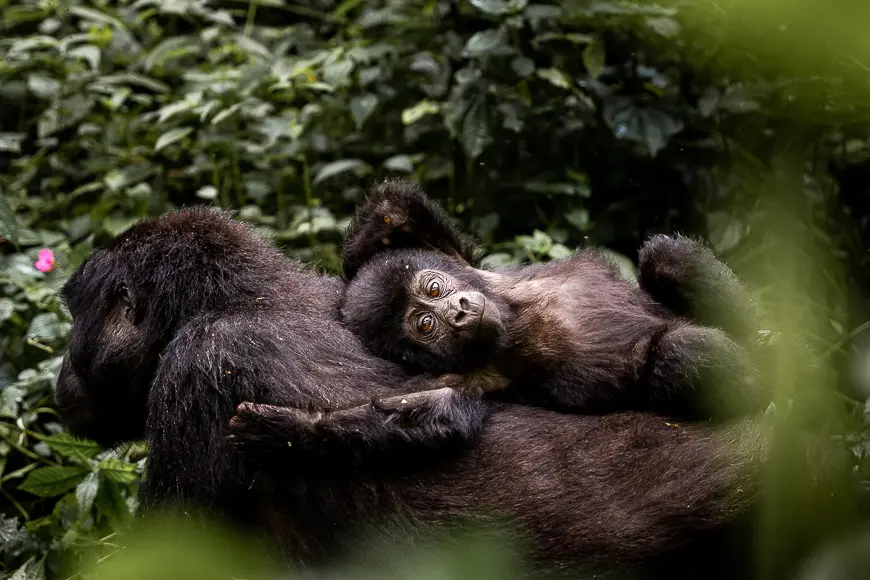
Gorilla Safari Uganda: A complete guide to an unforgettable mountain gorilla encounter
Uganda is world-famous as the destination for an unforgettable gorilla safari. In the dense, mist-covered rainforests of this East African country live the world’s last remaining mountain gorillas, only 1,063 are left. A gorilla safari in the renowned Bwindi National Park brings you literally face to face with these majestic creatures in their natural habitat. It’s a journey that will change your life and create memories that last forever.
Mountain gorillas: the largest living apes in the world
These colossal primates with gentle hearts are the largest living apes in the world. You might not know it, but these distant relatives share 98% of their DNA with us, no wonder their behavior feels so familiar and touching.
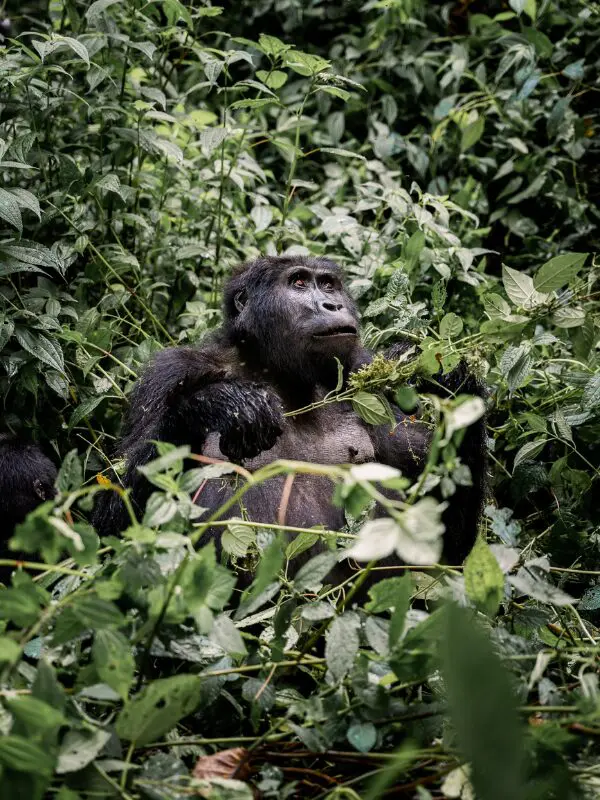
Just like in a big family, mountain gorillas live under the protection of a dominant silverback gorilla, recognizable by the striking silver-gray fur on his back and shoulders. Their daily life revolves around feeding on plants and caring for one another: a true example of life in community. During your gorilla safari in Uganda, you’ll have the unique chance to observe this social behavior up close.
The difference between mountain gorillas and silverback gorillas.
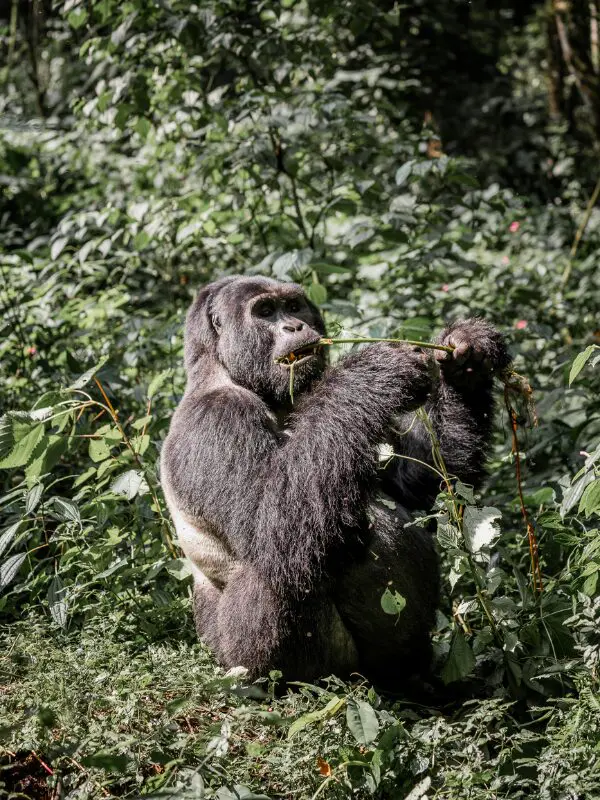
Many travelers wonder what exactly the difference is between a mountain gorilla and a silverback gorilla. All gorillas you encounter during your safari in Uganda are mountain gorillas, a subspecies that lives exclusively in the mountain rainforests. A silverback gorilla, on the other hand, refers specifically to an adult male mountain gorilla, usually between 12 and 15 years old.
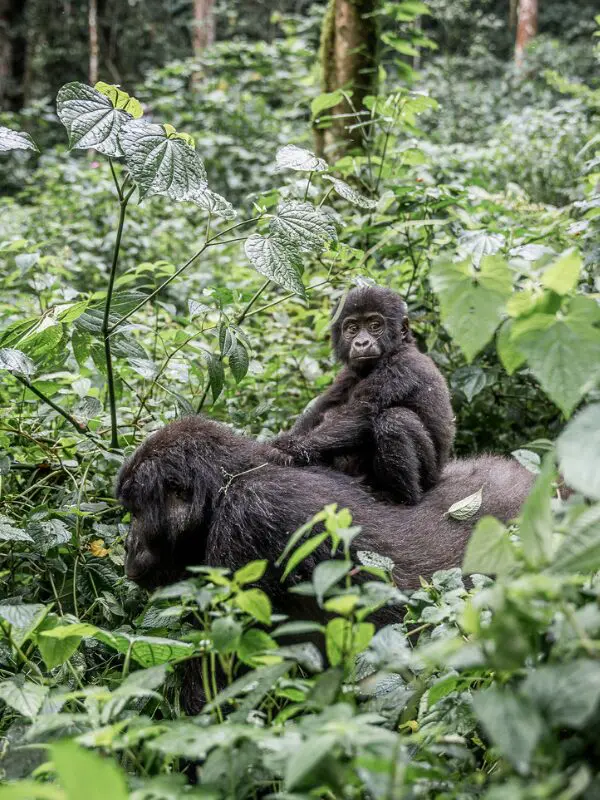
These dominant males are easily recognized by the distinctive silver-gray hair on their back and shoulders and they can weigh up to 200 kilograms. Female mountain gorillas and younger males don’t have this silver coloring. In every gorilla family you encounter on your safari, you’ll see one silverback gorilla leading the group, along with several females and their young.
Where can you experience the best gorilla safari in Uganda?
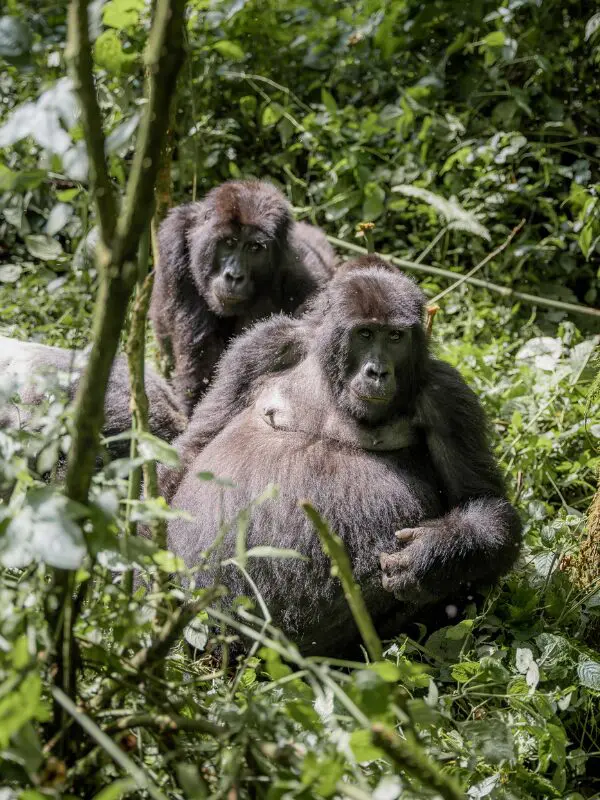
The dense, lush rainforest of Bwindi Impenetrable National Park is without a doubt the best place for a gorilla safari in Uganda. This UNESCO World Heritage Site is home to an estimated 459 (2018 census) to around 600 mountain gorillas, spread across nineteen habituated families that have learned to coexist peacefully with curious visitors.
Bwindi features four different tracking sectors, meaning there is almost always a gorilla family to find for your mountain gorilla trekking.
Bwindi Impenetrable National Park: the heart of the gorilla safari
For travelers seeking a more intimate experience, Mgahinga Gorilla National Park, located at the foot of the Virunga volcanoes, offers another fantastic gorilla safari option. This park is home to one habituated gorilla family and rewards visitors with breathtaking volcanic scenery and less busy trekking trails.
Mgahinga National Park: the quiet, more intimate gorilla safari option
For travelers looking for a more intimate and peaceful experience, Mgahinga National Park, located at the base of the Virunga volcanoes, also offers gorilla trekking. The park is home to one habituated gorilla family and is known for its breathtaking volcanic landscapes and quieter trails during your gorilla tracking.
Why Uganda Nomads chooses Bwindi
Although both parks are special in their own way, we at Uganda Nomads intentionally choose Bwindi Impenetrable National Park as the ideal location for your gorilla trekking in Uganda. And for good reason:
- The most reliable gorilla trekking location in the world: Your chance of spotting mountain gorillas in Bwindi is over 95%, making it one of the most reliable gorilla trekking destinations on Earth. The park has excellent infrastructure and experienced rangers who guide you safely toward the silverback and his family.
- Unique biodiversity: Bwindi is not only home to the largest population of mountain gorillas worldwide; it is also one of the most biodiverse rainforests in Africa. Did you know Bwindi hosts more than 120 mammal species, 350 bird species, 200 butterfly species and countless unique trees, ferns and orchids? It’s a true paradise for nature and wildlife lovers.
- Professional guidance & well-developed trails: A gorilla trekking experience in Bwindi is known for its strong organization and professional ranger teams. The trails are well-maintained, the rangers are highly trained and treks run smoothly and safely. Ideal for both adventurous travelers and those seeking comfort and reliability.
- Better accessibility: Bwindi is conveniently located between popular highlights such as Queen Elizabeth National Park and Lake Bunyonyi. This makes it an easy and natural stop in your Uganda road trip itinerary. Mgahinga, on the other hand, sits further off the standard routes, a practical reason why we choose Bwindi.
- Less dependent on weather conditions: Because Bwindi lies at a lower altitude than the volcanic Mgahinga, it’s less affected by heavy mist, rain and thick clouds. Trekkings almost always proceed as scheduled, increasing your chances of a successful and unforgettable gorilla encounter.
Practical preparation for your gorilla safari
Booking your gorilla permit for Uganda
Obtaining a gorilla permit is the first and most important step for your gorilla safari. These valuable permits need to be reserved at least six months in advance. You can book directly with the Uganda Wildlife Authority or through a specialized Uganda travel guide that handles all formalities for you, such as Uganda Nomads.
Physical preparation for mountain gorilla tracking Uganda
A gorilla safari is more physically demanding than many people realize. The tracking takes place in dense rainforest at high altitudes, where the trails can be steep and sometimes slippery. Start with light cardio training two to three months before your departure. Regular uphill walks and bike rides will help your body prepare for the challenge.
Make sure to stay well-hydrated in the days leading up to your gorilla safari and, ideally, plan a day of acclimatization at altitude. Your body needs time to adjust to the thin mountain air where the gorillas live.
Gear for your gorilla safari
For a comfortable mountain gorilla safari, you’ll need specific gear. Waterproof hiking boots with good ankle support are essential for the muddy trails in Bwindi. Wear long pants and a long-sleeved shirt to protect yourself from thorns and insects.
A waterproof rain jacket is a must, as the weather can change quickly in the mountain rainforest. Pack a light backpack with at least two liters of water, energy snacks, your camera (without flash), insect repellent, sunscreen, a small first aid kit and a face mask! Don’t forget extra batteries because during your hours-long gorilla trek you don’t want to miss a single moment of this unforgettable encounter.
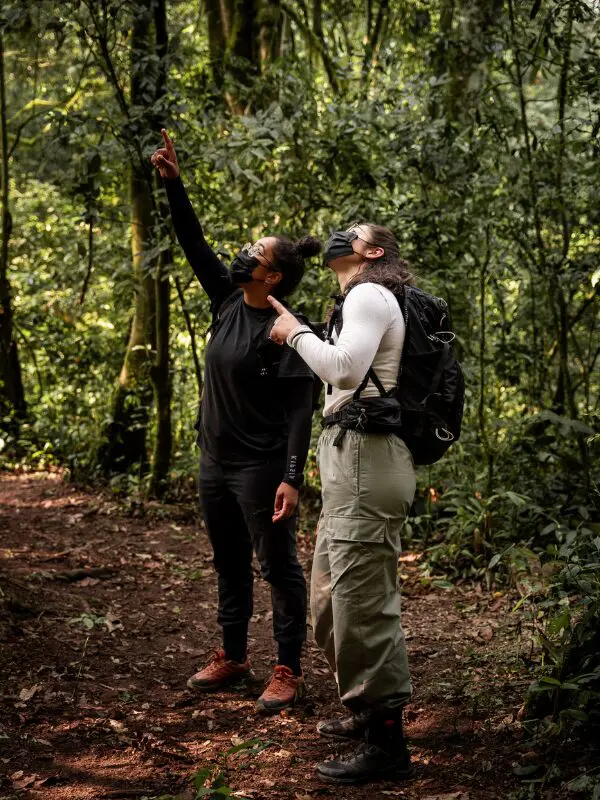
Why do you need to wear a face mask during a gorilla safari?
Since COVID-19, wearing a face mask has become mandatory during every gorilla trekking in Uganda, but the reason goes beyond pandemic prevention. Mountain gorillas share 98% of their DNA with humans, which means they are also susceptible to the same diseases we are. A simple cold that seems harmless to us can be deadly for a mountain gorilla, as they have no immunity to human pathogens.
All visitors are therefore required to wear a medical face mask throughout the gorilla safari once they are within 300 meters of the gorillas. This measure has proven highly effective in protecting the gorilla families and is a small price to pay for the privilege of observing these magnificent silverbacks in the wild.
The day of your gorilla safari: from briefing to encounter
The morning briefing: preparing for your mountain gorilla adventure
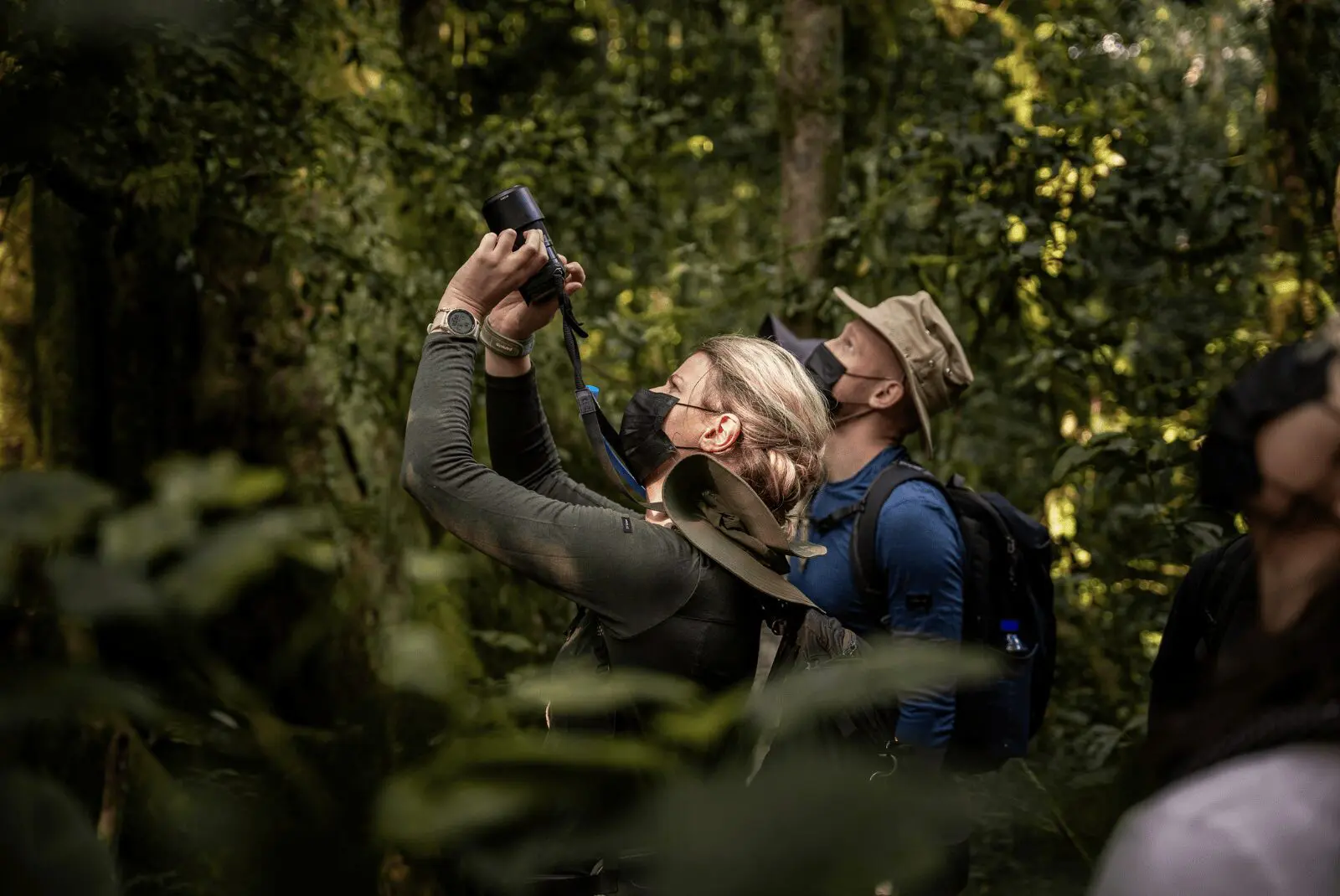
The big day of your gorilla safari starts early. In the morning, you’ll gather at the Bwindi Impenetrable National Park headquarters for a detailed briefing. Experienced rangers will explain the safety guidelines and share valuable information about the specific gorilla family you’ll be visiting. You’ll learn about the characteristics of the silverback leading the group and receive tips on interpreting gorilla behavior. Groups are formed with a maximum of eight people per gorilla family.
The mountain gorilla tracking: searching for the silverback gorilla
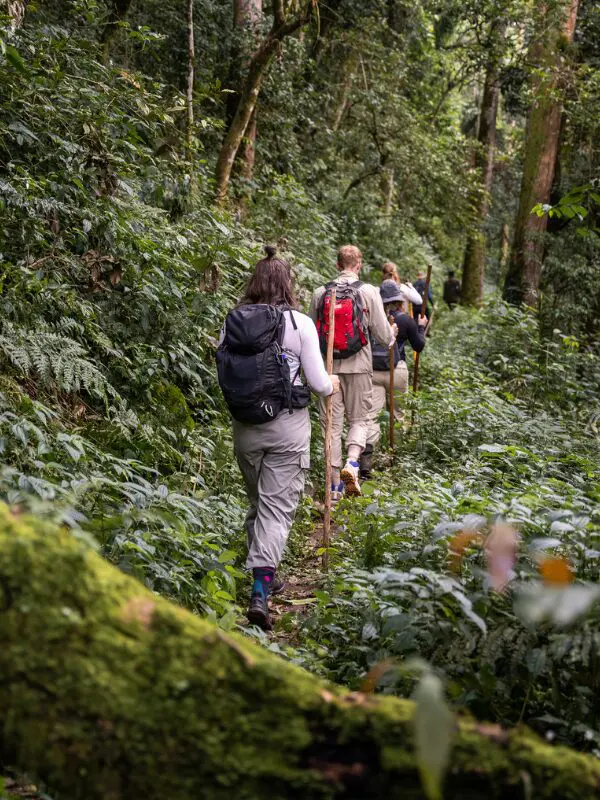
Then the real adventure begins. Throughout the trek, rangers stay in constant radio contact with trackers who have been following the gorillas’ movements since early morning. Depending on where the family is located, your trek may take anywhere from two to six hours through the dense rainforest of Bwindi.
Don’t worry about the pace. Your guides will adjust the rhythm to the group and take regular breaks. Along the way, they generously share their knowledge about the ecosystem, other wildlife inhabiting Bwindi and the unique flora of the mountain rainforest. Every step of your gorilla safari becomes a truly enriching experience.
The encounter: a magical hour with the mountain gorillas
Then comes the highlight of your safari: the moment you finally stand face to face with a real gorilla family. For a full hour, you can observe these majestic creatures from a safe distance of at least seven meters. You’ll witness the silverback guarding his territory, the females caring for their young and the playful young gorillas climbing through the trees.
Photography is allowed, but never use flash, as it can disturb and stress the gorillas. The rangers will stay with you throughout the encounter, explaining the behaviors you observe, answering your questions about gorilla family life and helping you recognize the most special moments of your safari.
This hour passes in the blink of an eye. It’s a moment of pure magic, a deep connection with nature that many describe as one of the most moving experiences of their lives and one you’ll never forget.
Extend your adventure: a complete Uganda roadtrip
If this extraordinary mountain gorilla encounter already makes you dream, there’s so much more waiting for you in Uganda! A complete tour through this country perfectly complements your gorilla safari with other natural highlights. Think of chimpanzee tracking in Kibale National Park, where you can observe our closest relatives or a classic safari in Queen Elizabeth National Park with its famous tree-climbing lions.
Many travelers opt for a 15-day Uganda road trip, which includes the gorilla safari along with many other unique experiences. You can have authentic encounters with local communities, admire the spectacular Murchison Falls, and enjoy boat trips on Lake Victoria. Uganda is called the “Pearl of Africa” for a reason. The country combines incredible biodiversity with warm-hearted people and breathtaking landscapes.